
There’s nothing quite like the freedom of hitting the open road with everything you need right behind you. But walking into a dealership without knowing what to look for can turn an exciting purchase into an overwhelming one.
This guide covers the key features to weigh up when buying a caravan for the first time.
What size caravan do you actually need?
The right caravan size comes down to who’s travelling and how long you plan to be on the road. A van that’s too small becomes uncomfortable fast; one that’s too large can be harder to tow and park.
Solo and couple travellers
Compact vans in the 16 to 19-foot range are the sweet spot for one or two people. They’re easier to manoeuvre, lighter on towing capacity requirements and still offer everything you need for extended travel.
- Look for a layout with a queen bed, a functional kitchen and a full ensuite
- Check the tare weight against your vehicle’s braked towing capacity
- Compact vans suit both weekend trips and longer grey nomad-style travel
Family travellers
Families need sleeping space for at least four, plus storage for gear, kids’ equipment and food supplies.
- Aim for a body length of 6,500mm or more for comfortable family layouts
- Bunk configurations free up the main bedroom for adults
- Storage underneath and at the rear matters a lot when travelling with kids
Why caravan construction material matters more than you think
Construction material directly affects how long your van lasts, how easy it is to maintain and how well it handles Australia’s climate extremes.
Timber vs timber-free construction
Traditional caravans use a timber frame, which is prone to rot, mould and termite damage over time.
- Timber-free construction uses aluminium framing with fibreglass or composite cladding
- This eliminates the risk of moisture ingress causing structural damage to the walls
- A timber-free build also means the van holds its structural integrity for longer
Insulation and weather resistance
Australia’s climate ranges from tropical humidity in the north to freezing nights in alpine regions. Insulation quality affects comfort year-round.
- XPS foam sandwich panels provide strong thermal resistance in walls, roof and floor
- PET foam floor panels add an extra layer of insulation underfoot
- One-piece roof construction eliminates joins that can let water in over time
What kitchen and living features should a first caravan have?
Most caravan travellers spend the majority of their time outside, so the best kitchens and living areas are designed with that in mind.
- An external BBQ gas point and slide-out tray make outdoor cooking practical
- A rollout awning (13 to 16 feet) creates a proper outdoor living area
- Inside, look for a compressor fridge, instant hot water and a cassette toilet
- A top-load washing machine is a game-changer on trips longer than a week
What local regulations should first-time buyers know about?
All states set a general open-road towing limit of 100 km/h, so the weight, suspension and braking capacity of your caravan all matter from a legal standpoint. Greywater tanks are also required in most national parks.
For more specific towing and road rules, check the official road authority of your state:
- NSW — Transport for NSW
- VIC — VicRoads
- QLD — TMR Queensland
- SA — DPTI South Australia
- WA — Main Roads WA
- TAS — Department of State Growth
- NT — Department of Infrastructure
- ACT — Access Canberra
Find your first caravan with Harbour Caravans
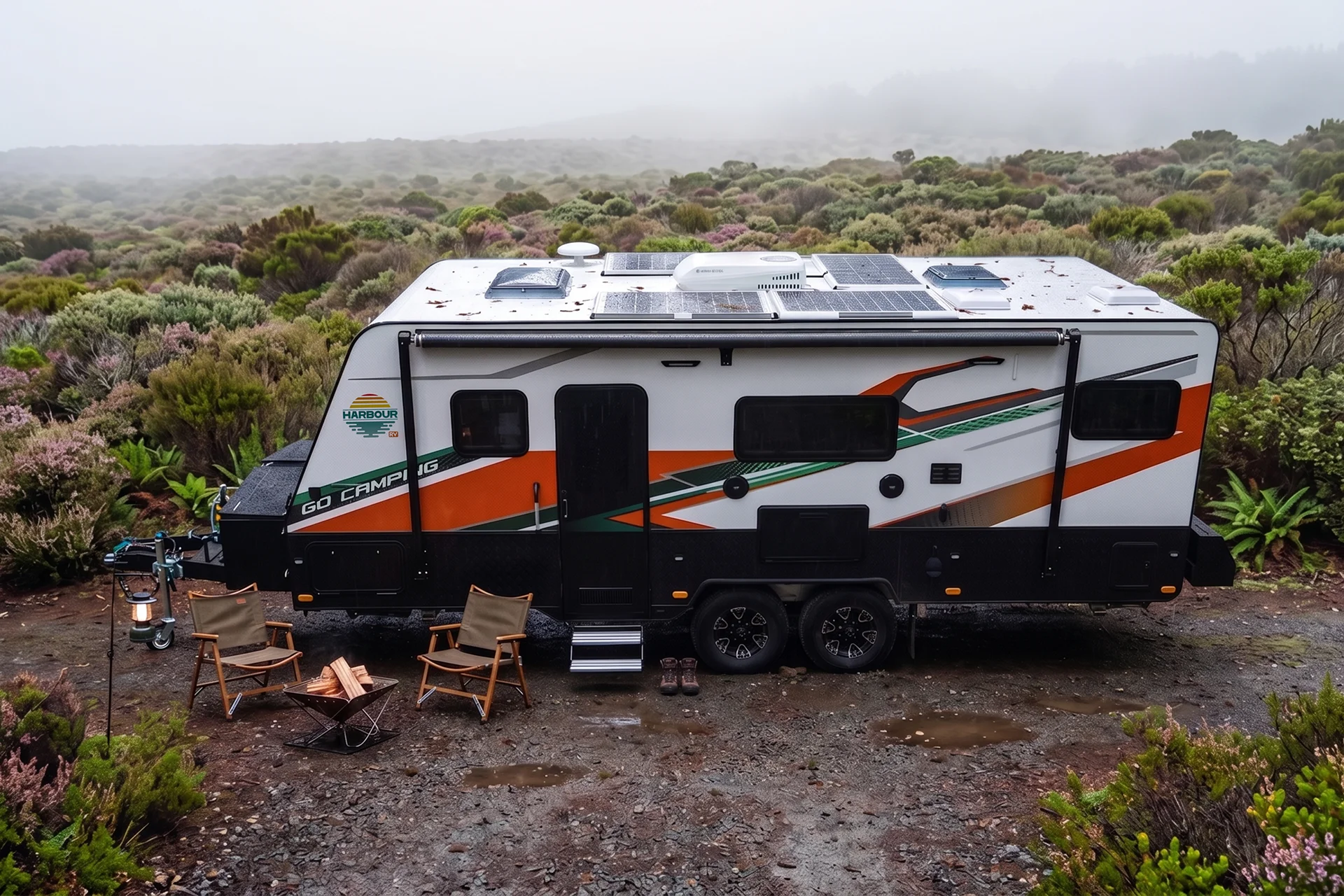
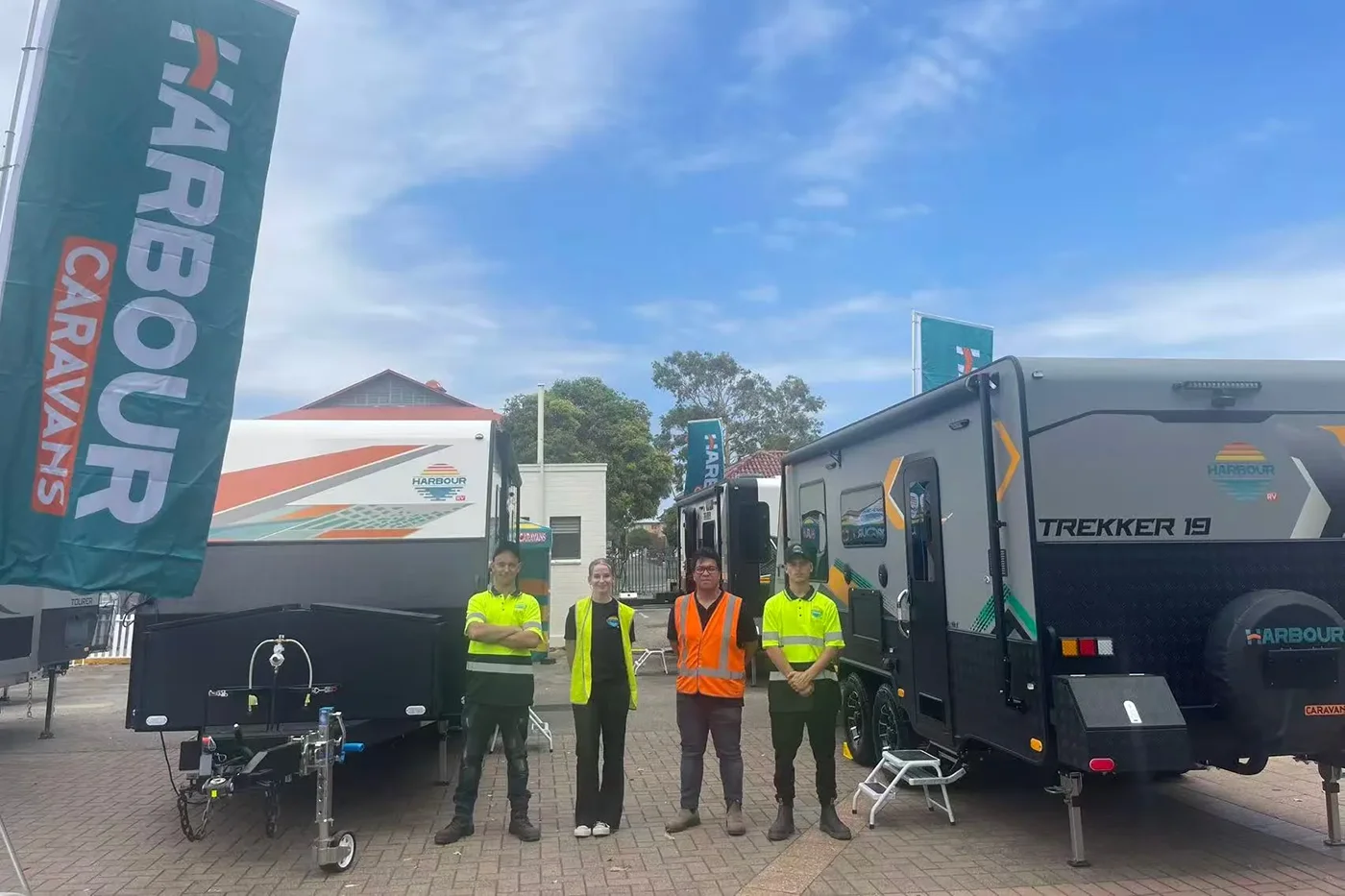
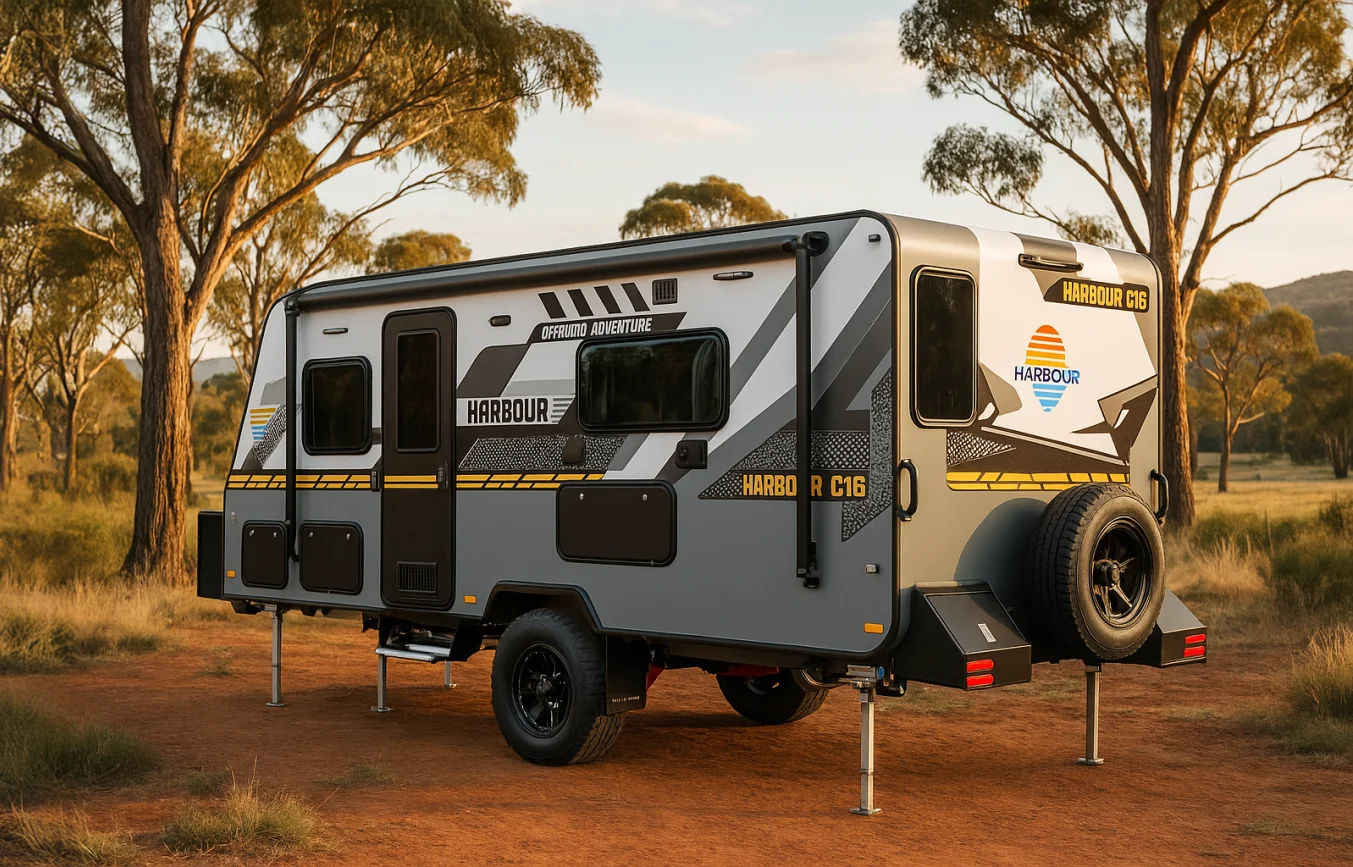
At Harbour Caravans, we make buying a caravan easier by building every van with the features first-time buyers are actually looking for. Whether you’re starting with the compact off-road Crest 16, stepping into the touring-ready Trekker 19 or upgrading to the spacious Trekker 22F, there’s a van built for your kind of adventure.
Explore the full range or get in touch with the Harbour Caravans team to find the right fit for your next journey.