
[nectar_btn size=”jumbo” button_style=”regular” button_color_2=”Accent-Color” icon_family=”iconsmind” el_class=”custom-toggle-btn” text=”SUMMER” aria_label_text=”Summer Button” url=”#summer-content” icon_iconsmind=”iconsmind-Sun”]
[nectar_btn size=”jumbo” button_style=”regular” button_color_2=”Accent-Color” icon_family=”iconsmind” el_class=”custom-toggle-btn” text=”AUTUMN” aria_label_text=”Autumn button” url=”#autumn-content” icon_iconsmind=”iconsmind-Autumn”]
[nectar_btn size=”jumbo” button_style=”regular” button_color_2=”Accent-Color” icon_family=”iconsmind” el_class=”custom-toggle-btn” text=”WINTER” url=”#winter-content” icon_iconsmind=”iconsmind-Winter-2″]
[nectar_btn size=”jumbo” button_style=”regular” button_color_2=”Accent-Color” icon_family=”iconsmind” el_class=”custom-toggle-btn” text=”SPRING” url=”#spring-content” icon_iconsmind=”iconsmind-Spring”]
Summer (December to February)
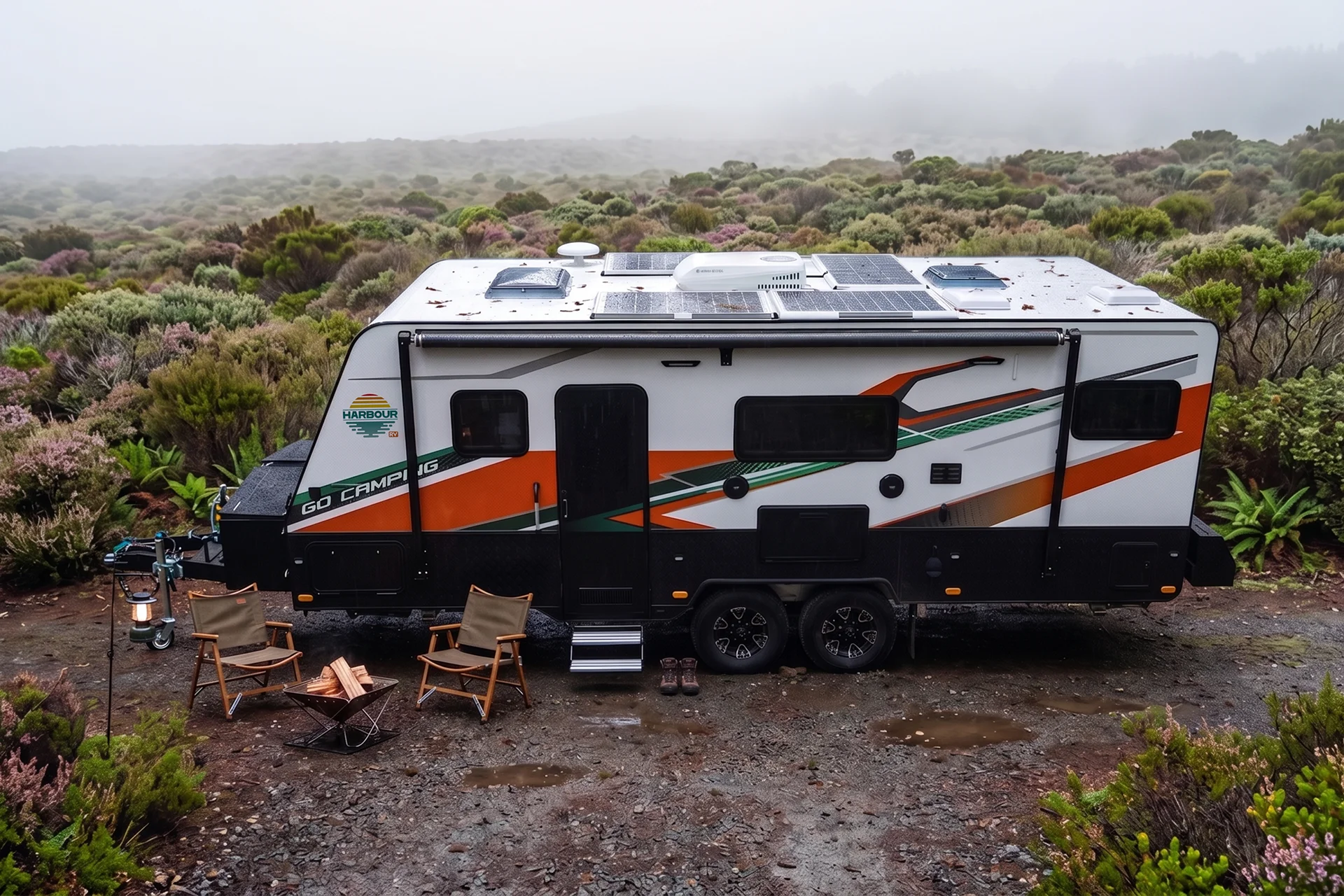
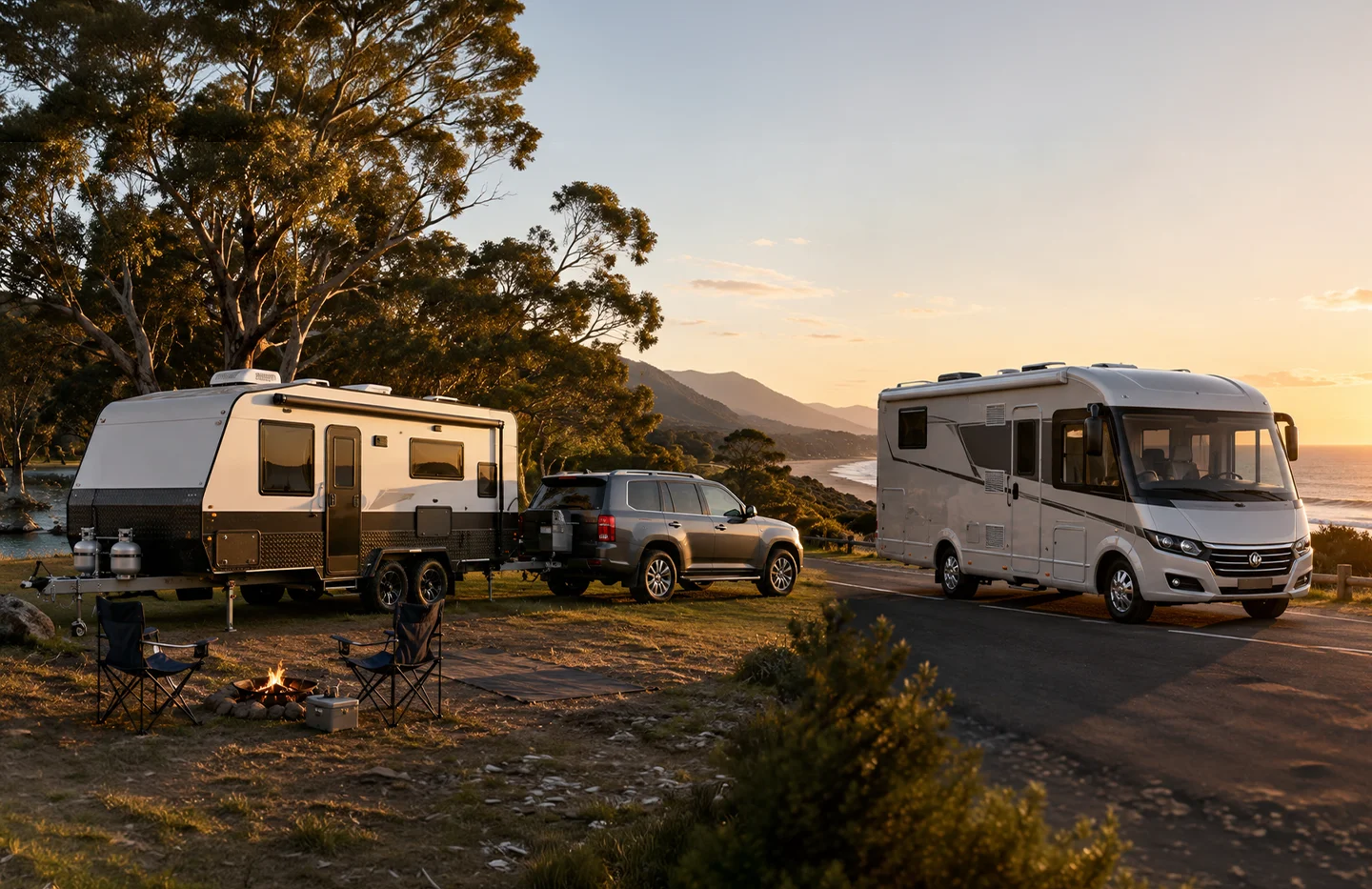
Summer pushes you south and into the highlands. The tropical north goes into wet season lockdown, coastal Queensland gets humid and the real action shifts to Tasmania, the Victorian Alps and the South Australian coastline. Mornings start early, afternoons cool off fast and the light lasts long enough to make every camp feel like it was worth the drive.
FEATURED ROUTES
The Great Ocean Road Loop
Victoria · 12 to 14 days · ~900 km
Melbourne to Warrnambool and back through the Grampians. Summer keeps the weather mild, crowds thin out once you pass Lorne and the clifftop campsites between Apollo Bay and Port Campbell are among the best in the country. Allow extra days for the Otways.
18°C to 26°C Sealed roads2 WD suitable Coastal
What to know before you go
- Wilpena Pound Resort fills fast in April and May. Book sites 3 to 4 months ahead.
- Fuel stops thin out north of Hawker; carry a spare jerry can as standard.
Tasmania’s East Coast Drive
Tasmania · 10 to 14 days · ~700 km
Hobart to Bicheno to St Helens, looping back through the highlands. Summer is the only reliable window to do this route comfortably. The beaches at Wineglass Bay and Friendly Beaches are genuinely world-class, and the highland lakes in the centre of the state are cold, quiet and worth every kilometre of gravel road to reach them.
14°C to 24°C Mixed surfaceAWD recommended National parks
What to know before you go
- Ferry bookings from Melbourne fill months ahead for December and January.
- Many highland and national park sites have no power; a solid lithium battery setup runs the essentials comfortably.
SUMMER CARAVAN FIT-OUT
Set up for unpredictable weather
The two powered roof hatches across all Harbour Caravans models are the most useful feature for spring travel, letting you manage temperature quickly without opening side windows to insects or pollen. Always pitch the awning with a slight rear tilt so water runs off cleanly, and keep wet-weather gear in the external toolbox to avoid dampening the living space.
Typical Summer Travel Conditions
Autumn (March to May)
Autumn is widely considered the best caravan season in Australia. The heat drops, the crowds clear and the roads open back up. Queensland’s Outback becomes accessible again, the alpine areas in New South Wales and Victoria turn gold and red and the Flinders Ranges in South Australia are at their most vivid. Days are long enough to cover ground and cool enough to enjoy it.
FEATURED ROUTES
Port Augusta north through Quorn, Wilpena Pound and Blinman, then out to Lake Eyre if water levels are right. Autumn is the sweet spot. Daytime temperatures sit in the high 20s, nights are crisp and the wildflower season starts early in the ranges. The red rock and yellow spinifex combination in late April is something you plan a second trip around.
14°C to 28°C Unsealed sections AWD recommended Outback
What to know before you go
- Wilpena Pound Resort fills fast in April and May. Book sites 3 to 4 months ahead.
- Fuel stops thin out north of Hawker; carry a spare jerry can as standard.
Bright, Mount Buffalo, Harrietville and Dinner Plain. The alpine ash and deciduous plantings around Bright turn full colour by late April, and the campgrounds along the Ovens River are genuinely beautiful. This is a short-drive, long-linger route. You cover less ground but stay longer at each stop.
8°C to 20°C Sealed roads 2WD suitable Alpine/forest
What to know before you go
- Peak autumn colour in Bright runs late April to mid-May. Festival weekends are heavily booked.
- Nights drop to near freezing from late May. A good heating setup makes a significant difference.
AUTUMN CARAVAN FIT-OUT
Set up for changing conditions
A diesel or gas heater is the most important addition for autumn travel as nights in the highlands and outback drop to near-zero from April. Harbour Caravans’ 32mm XPS foam panel construction holds warmth far better than a standard timber-frame build, and a quick check of all door and hatch seals before a dusty outback route will save you a very dirty van.
TYPICAL AUTUMN TRAVEL CONDITIONS
Winter (June to August)
Winter is the season that sends Australian caravanners north. The Top End, Kimberley, Kakadu and Cape York all open up when the wet season ends and the heat becomes manageable. Queensland’s interior is perfect in July and August. Down south, winter brings drama to the Great Ocean Road and clarity to the Snowy Mountains. Just be prepared for cold nights wherever you park.
FEATURED ROUTES
Derby to Kununurra through the heart of the Kimberley. The road is unsealed and corrugated in sections, gorges require short walks and remote campgrounds have no facilities beyond a drop toilet and a fire ring. This is bucket-list Australia.
10°C to 28°C Unsealed/corrugated 4WD required Remote
What to know before you go
- Off-road coil suspension and mud terrain tyres are strongly recommended for the corrugations.
- Carry 2 spare tyres minimum. Tyre damage is common on this road.
Canberra to Jindabyne, Charlotte Pass and the Snowy River country. Winter brings snow to the high country and crisp clarity to the lower valleys. Not a common caravan destination in winter, which is exactly why it works. Campgrounds are quiet, the scenery is breathtakingly stunning and a warm, well-insulated van makes it perfectly comfortable.
-2°C to 12°C Sealed roads Chains may be required Alpine/forest
What to know before you go
- Snow chains are legally required above the snowline during winter. Carry them even if you don’t plan to go high.
- Water tanks can freeze overnight; insulated tank covers and running taps before bed help prevent this.
WINTER CARAVAN FIT-OUT
Set up for the cold
A diesel heater on low will run the van comfortably overnight with minimal battery draw, and Harbour Caravans’ XPS foam panel construction means it holds heat for significantly longer after it cuts out. At southern latitudes in July, expect around 3.5 to 4 peak solar hours a day, so a DC-DC charger for top-ups on driving days is a practical addition.
TYPICAL WINTER TRAVEL CONDITIONS
Spring (September to November)
Spring catches Australia in transition, and that is exactly what makes it interesting. Western Australia’s wildflower season is a genuine world-class natural event from August to October. The Nullarbor opens up before the summer heat arrives. Timing matters with spring, but get it right and you’ll have routes largely to yourself.
FEATURED ROUTES
Perth north through the Wheatbelt, Midwest and Murchison to Kalbarri and Shark Bay. The wildflower season runs from August to October, depending on rainfall. This route catches multiple bloom zones at their peak. Everlastings around Mullewa, kangaroo paws near Geraldton and the gorges of Kalbarri in full colour are absolutely breathtaking. The shoulder of the season in September is the best balance of bloom and mild weather.
15°C to 28°C Mostly sealed 2WD suitable Wildflowers/coast
What to know before you go
- Wildflower timing shifts by 2 to 4 weeks depending on winter rainfall. Check the WA Wildflower Society map before departure.
- Kalbarri gorges require light hiking ability. Comfortable boots and sun protection are essential.
Port Augusta to Norseman along the Eyre Highway. Spring is the only sensible window to cross the Nullarbor. Summer is too hot and autumn books out quickly. The Head of Bight whale-watching platform is open from June to October and is one of the most underrated wildlife experiences in Australia. The straight stretches, the big sky and the cliffs at the Bunda Cliffs lookout are worth every kilometre.
12°C to 24°C Sealed highway 2WD suitable Remote/whale watching
What to know before you go
- Fuel intervals between Ceduna and Norseman can exceed 200km. Always fill at every roadhouse.
- Fresh produce and fruit restrictions apply when crossing the WA border; use what you have or declare it.
SPRING CARAVAN FIT-OUT
Set up for unpredictable weather
The two powered roof hatches across all Harbour Caravans models are the most useful feature for spring travel, letting you manage temperature quickly without opening side windows to insects or pollen. Always pitch the awning with a slight rear tilt so water runs off cleanly, and keep wet-weather gear in the external toolbox to avoid dampening the living space.
TYPICAL SPRING TRAVEL CONDITIONS
Check conditions for your trip
Enter a destination and travel month to get a general climate snapshot for your planned route. For live forecasts, always check the Bureau of Meteorology before you leave.
[harbour_weather]
Find the right caravan for your next trip
Whether you’re planning a winter run up the Gibb River Road or a spring drive down the NSW coast, the right caravan setup makes the difference. Harbour Caravans has models built for exactly these conditions.
Crest 16
Trekker 19
Trekker 22F
[nectar_btn size=”medium” constrain_group_2=”yes” button_style=”regular” button_color_2=”Extra-Color-3″ icon_family=”none” text=”Explore the range” margin_left=”1″ margin_right=”1″ url=”/new-caravans/”][nectar_btn size=”medium” constrain_group_2=”yes” button_style=”regular” button_color_2=”Extra-Color-3″ icon_family=”none” text=”Get personalised advice” margin_left=”10″ margin_right=”10″ url=”/contact-us/”]